
Thank you for visiting our website.
This site is exclusively reserved for health professionals.

Une professionnelle de santé en train de travailler

I am a healthcare professional

Un patient est au téléphone

I would like to access the ‘patient’ dental implant website.

Un patient est au téléphone

I would like to access the ‘patient’ website for jaw surgery.

Bone grafting in orthognathic surgery

The role of bone grafting in orthognathic surgery

The objective of orthognathic surgery is to correct jaw positioning abnormalities, whether such abnormalities are of congenital or traumatic origin, or due to growth disorders. In some cases, simple bone mobilization is insufficient. It is necessary to use bone grafts to fill residual gaps, improve wound healing, strengthen stability and improve aesthetic outcomes.
Why combine orthognathic surgery and bone grafting?

When performing a maxillary or mandibular osteotomy, the gaps produced between bone segments after repositioning can be significant. These zones, if they are not filled, can result in:

  • Aesthetic defects, particularly at the lower border of the mandible
  • Instability, which over time can compromise occlusion and the functional outcomes
  • Poor consolidation extending at times to pseudoarthrosis

Thus, implementing a bone graft promotes bone regeneration, limits complications and optimises surgical outcomes.

What types of grafts are used?

Several options are available based on the needs and the complexity of the case:

  • Autografts (harvested directly from the patient’s body): They offer high wound healing potential. However, they necessitate a donor site, and this increases both morbidity and the duration of the intervention.
  • Allografts (originating from human bone banks) eliminate the necessity of harvesting and a second surgical site, thus reducing procedure time. They offer an unlimited quantity of grafts and good osteoconductive properties. However, unlike autografts (grafts taken from the recipient patient), they do not possess osteogenic properties, and their use is subject to specific regulations, distinct from those governing medical devices.
  • Xenografts, derived from animal bone, share some similar advantages: no additional harvesting, reduced surgical time and unlimited availability. Furthermore, they are classified as medical devices. However, they do not possess osteogenic properties and are relatively unremodelable, which can limit their complete integration.
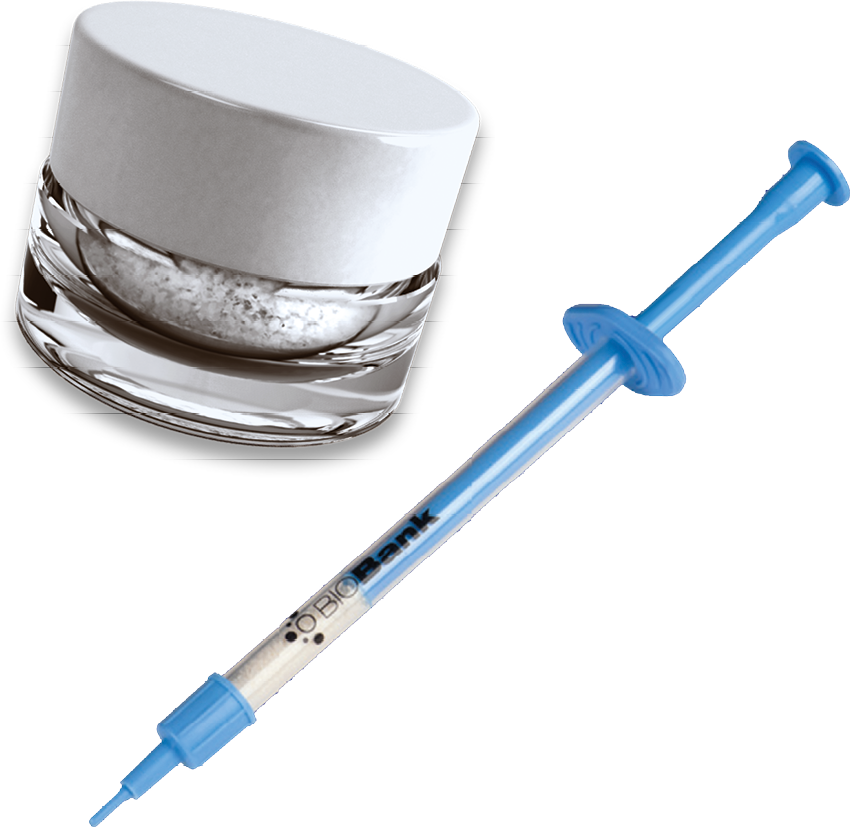
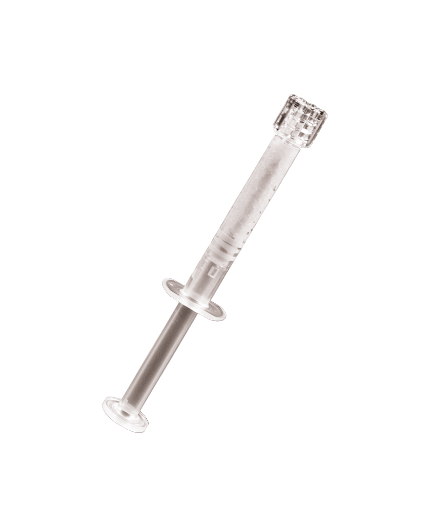
  • Finally, laboratory-produced synthetic bone substitutes are a reliable and cost-effective alternative. They eliminate the need for a second surgical site, reduce the procedure time and offer an unlimited supply of grafts, with the added advantage of a relatively low cost and their status as medical devices. Their limitations lie in the lack of osteogenic properties and outcomes that are sometimes less predictable than those obtained with other types of grafts.

What are the demonstrated benefits?

Recent studies underscore several advantages:

  • Enhanced postoperative stability: Filling bone gaps limits resorption and reduces the risks of recurrence, particularly during significant mandibular advancements.
  • Reduction of aesthetic defects[1]: A 2023 meta-analysis shows that grafts significantly reduce irregularities at the lower border of the mandible after advancement.
  • Optimised wound healing[2]: A systematic review confirms that providing a graft promotes bone consolidation and improves both aesthetic and functional outcomes.
  • Effectiveness in complex cases[3]: In reconstructions or if there are severe asymmetries (e.g. facial microsomia), bone grafts can restore bone continuity and improve symmetry.

Limits and precautions

If the intervention is justified, there are some limitations:

  • A lack of large-scale randomised studies
  • Variability depending on the type of graft used
  • Possible morbidity of the donor site for autografts
  • Extra costs and additional operating time

Conclusion

A bone graft in orthognathic surgery is a valuable tool for improving stability, aesthetics and wound healing after maxillary and mandibular repositioning. It is not systematic but its indication is particularly pertinent in cases of significant advancement, intersegmental gaps or complex reconstructions.

[1] Sales PHH, et al. Is it necessary to use bone grafts to prevent defects at the lower border of the mandible after mandibular advancement? Int J Oral Maxillofac Surg. 2023;52(2):140-149. PMID: 36107287
[2] Alyahya A, Swennen G. Bone grafting in orthognathic surgery: a systematic review. Int J Oral Maxillofac Surg. 2019;48(10):1255-1266. PMID: 30241739
[3] Sugiyama M, et al. Orthognathic surgery with iliac bone grafting for an interpositional gap in a patient with type III hemifacial microsomia. J Oral Maxillofac Surg Med Pathol. 2023;35(5):485-489. PMID: 37404691