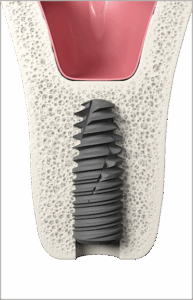
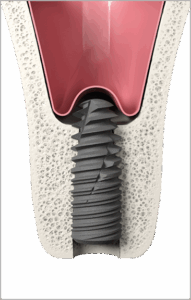
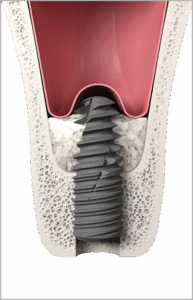
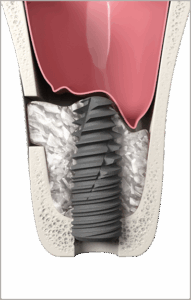
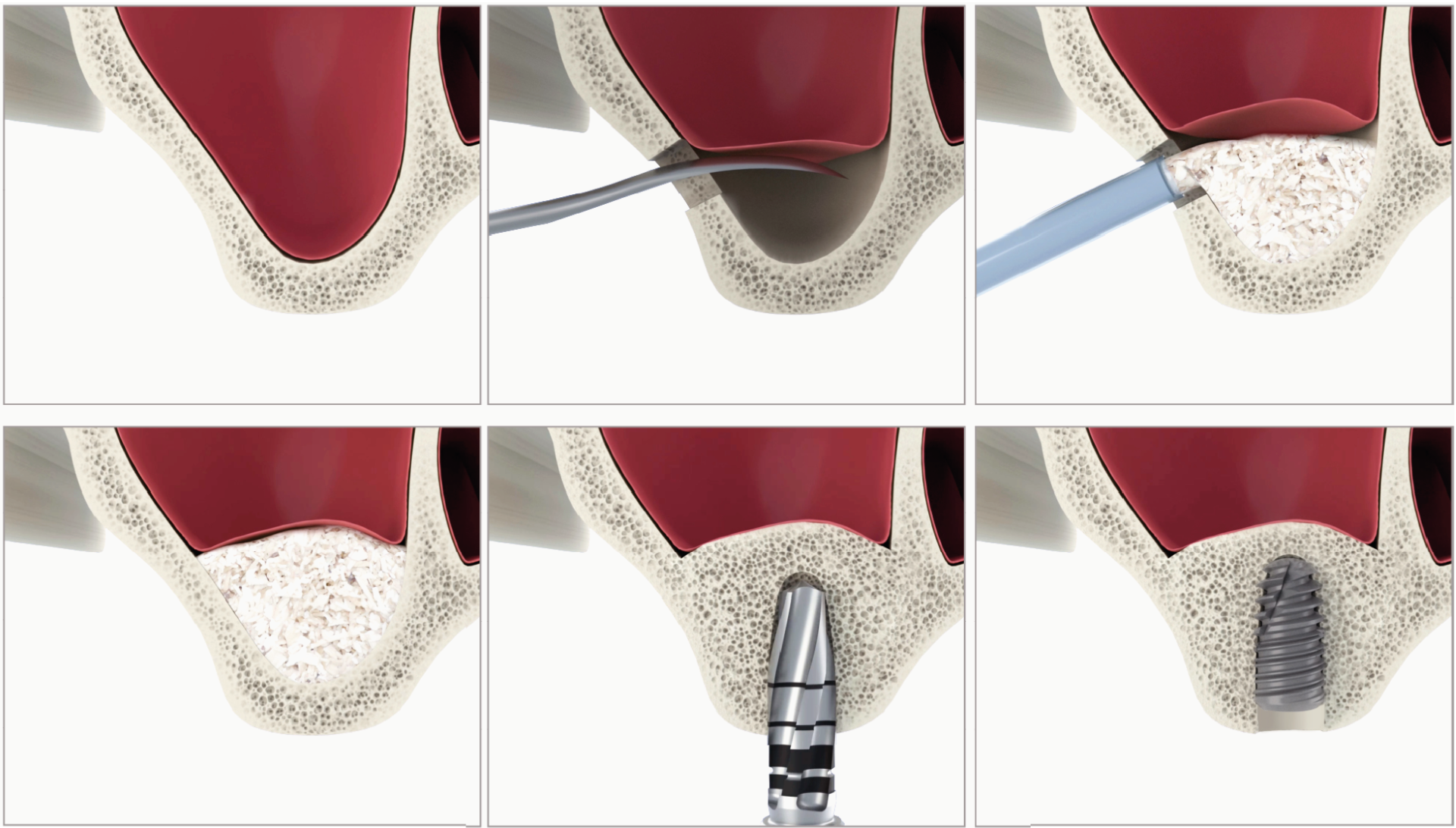
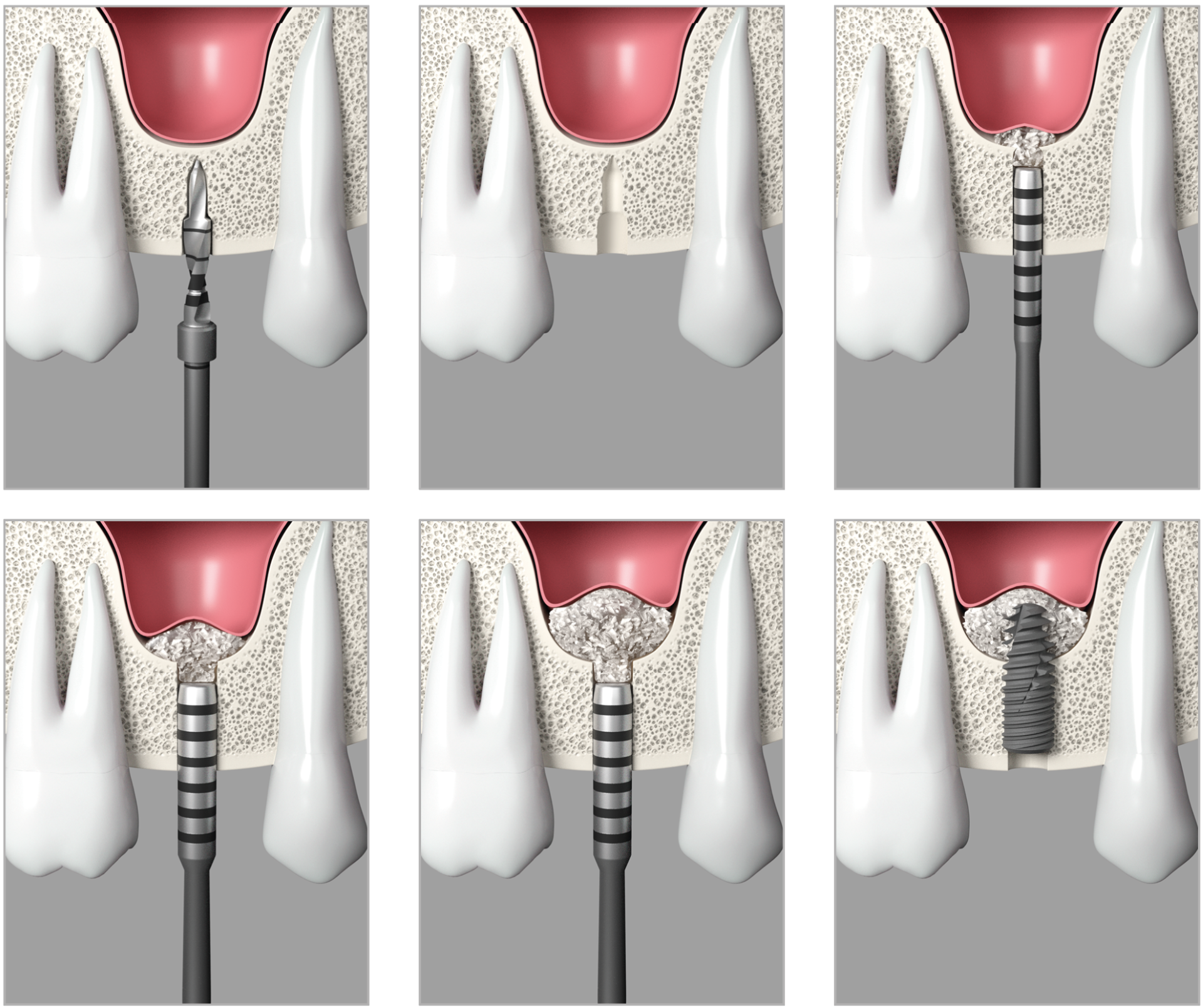
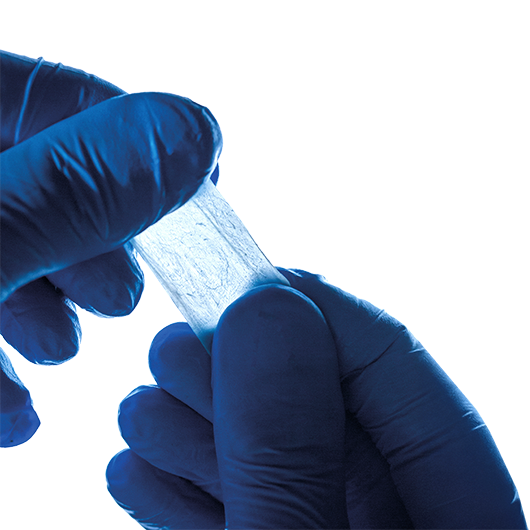
For sinus lifts, as in implantology, several types of bone grafts can be used depending on the clinical indications and the practitioner’s needs.
Allografts, derived from treated and virus-inactivated human bone, have the advantage of not requiring a second surgical site, thus reducing procedure time. They offer an unlimited quantity of grafts and good osteoconductive properties. However, unlike autografts (grafts taken from the recipient patient), they do not possess osteogenic properties, and their use is subject to specific regulations, distinct from those governing medical devices.
Xenografts, derived from animal bone, share some similar advantages: no additional harvesting, reduced surgical time and unlimited availability. Furthermore, they are classified as medical devices. However, they do not possess osteogenic properties and are relatively unremodelable, which can limit their complete integration.
Finally, laboratory-produced synthetic bone substitutes are a reliable and cost-effective alternative. They eliminate the need for a second surgical site, reduce the procedure time and offer an unlimited supply of grafts, with the added advantage of a relatively low cost and their status as medical devices. Their limitations lie in the lack of osteogenic properties and results that are sometimes less predictable than those obtained with other types of grafts.